
Most travelers assume their passport is valid until the printed expiration date. That assumption costs people flights every year. A passport valid for 10 months can still get you denied boarding if your destination requires 6 months of remaining validity. In 2026, several countries updated entry rules, and the penalties for missing a single document are higher than ever — denied entry, fines, or deportation.
This isn’t a checklist of obvious things. This is the exact process I use to avoid border problems, based on government advisories and real rejection reports.
Passport Validity: The 6-Month Rule Is Not Optional
The 6-month passport validity rule applies to roughly 75 countries, including most of Southeast Asia, the Schengen Area, and the Middle East. Your passport must have at least 6 months of remaining validity beyond your departure date from that country. Not your arrival date. Not your return home. The day you leave.
Example that kills trips: You fly to Thailand on June 1, 2026. You leave on June 15. Your passport expires December 10, 2026. That’s 5 months and 25 days after your departure — 5 days short. Denied boarding. The airline won’t let you check in.
How to check without guessing
- Open your passport to the photo page.
- Find the expiration date.
- Add 6 months to that date.
- If that date falls before your return flight home, you need a renewal.
For U.S. passport renewals in 2026, standard processing takes 6–8 weeks. Expedited (paid extra) takes 2–3 weeks. If you’re under 10 weeks from departure, pay for expedited. Do not risk it.
Blank pages requirement
Some countries require 2–4 blank visa pages (not the endorsement pages). India requires 2 blank pages. South Africa requires 2 consecutive blank pages. If your passport is full of stamps, you may need to renew early just for page space.
Bottom line: If your passport expires within 9 months of your trip, renew it now. The cost of renewal ($130 for U.S. adults in 2026) is cheaper than a canceled flight.
Visa Requirements: The Country-Specific Trap

Visas are not optional suggestions. In 2026, more countries moved to mandatory eVisa systems with pre-travel approval. The old “get a visa on arrival” option is disappearing.
Turkey: eVisa required. Apply online, costs $50, approval in 24 hours. Do not show up without it — they will turn you away.
Vietnam: eVisa for 90 days, $25. But only if you enter through specific airports. Land border crossings may require a different visa. Check your exact port of entry.
Australia: ETA (Electronic Travel Authority) mandatory for U.S. passport holders. $20 AUD. Apply through the official Australian ETA app. Third-party sites charge 3x the price for the same approval.
| Country | Visa Type | Cost (USD) | Processing Time | Common Rejection Reason |
|---|---|---|---|---|
| Turkey | eVisa | $50 | 24 hours | Passport valid less than 6 months |
| Vietnam | eVisa | $25 | 3 business days | Wrong port of entry listed |
| Australia | ETA | $13 AUD | Instant to 12 hours | Criminal record not disclosed |
| India | eVisa | $40 | 72 hours | Passport with less than 6 months validity |
| Kenya | eVisa | $51 | 2–7 days | Incomplete accommodation proof |
Failure mode: Travelers assume their passport covers everything. It doesn’t. I’ve seen people denied boarding for a $25 eVisa they could have applied for in 10 minutes. Check your destination’s embassy website directly. Do not trust third-party aggregators for visa rules — they are often outdated.
Travel Insurance: The One Document You Don’t Think About Until It’s Too Late
Travel insurance isn’t a document you show at immigration (usually). But it’s the document that saves you $50,000 when things go wrong. In 2026, medical evacuation costs from remote areas average $75,000–$150,000. Standard health insurance does not cover international medical evacuation.
What to look for:
- Medical evacuation coverage: Minimum $250,000. This covers helicopter or air ambulance transport to a hospital.
- Cancellation coverage: At least 100% of trip cost. Some policies cap at $10,000 — that won’t cover a $15,000 family trip to Japan.
- Pre-existing condition waiver: If you have a chronic condition, find a policy that covers acute onset of pre-existing conditions. Most standard policies exclude this.
Concrete numbers: World Nomads Explorer plan for a 2-week trip to Thailand costs ~$120 for a 30-year-old. It covers $500,000 in medical evacuation. Compare that to the $0 you’d have without it.
Skeptic check: “I’ll just buy it at the airport.” You can’t. Most policies require purchase within 14 days of your first trip deposit to qualify for pre-existing condition waivers. If you wait until the week before, you lose that protection.
Affiliate context: If you’re booking through a travel rewards card, check if it includes travel insurance. Many premium cards (like Chase Sapphire Preferred or Capital One Venture X) include trip cancellation and delay coverage. But they rarely cover medical evacuation. You may need a standalone policy for that.
Digital Backups: The 3-2-1 Rule for Documents
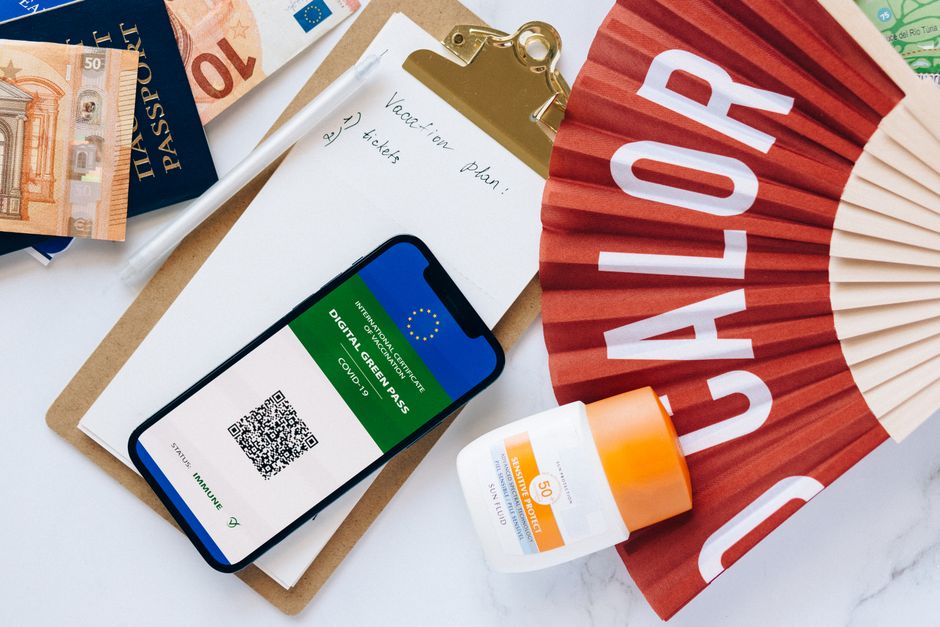
Losing your passport in a foreign country is a nightmare. Losing your passport and having no backup copies is a multi-day bureaucratic disaster. The fix is simple: the 3-2-1 rule for documents.
- 3 copies of every document: passport photo page, visa approval, travel insurance card, itinerary.
- 2 different formats: one physical paper copy, one digital scan.
- 1 off-site backup: stored in the cloud (encrypted) or with a trusted contact back home.
How I do it:
- Scan every document at 300 DPI as a PDF.
- Upload to a password-protected folder in Google Drive or iCloud.
- Email one copy to a family member.
- Print a physical copy and keep it in a separate bag from your passport.
Critical document you probably forgot: Your travel insurance policy number and 24-hour emergency contact. If you have a medical emergency at midnight in a country where you don’t speak the language, you need that number accessible offline. Save it as a note on your phone’s lock screen.
Entry/Exit Programs: Global Entry, TSA PreCheck, and ESTA
These aren’t just convenience programs — they can be entry requirements depending on your itinerary.
Global Entry ($100 for 5 years) includes TSA PreCheck. It speeds up U.S. customs re-entry. But it also includes NEXUS for Canada and SENTRI for Mexico. If you travel to Canada or Mexico frequently, NEXUS ($50 for 5 years) is cheaper and includes Global Entry benefits.
ESTA ($21) is mandatory for visa-free travel to the U.S. for citizens of 40 countries. In 2026, ESTA applications are taking 72 hours on average. If you’re flying to the U.S. in 3 days, apply now. Rejection reasons include past travel to certain countries (Iran, Iraq, Syria, Sudan) or any criminal record.
Failure mode: Travelers assume ESTA is instant. It’s not. I’ve watched people miss flights because they applied at the gate and got “pending” status. Apply at least 1 week before departure.
When NOT to buy Global Entry: If you fly internationally once every 3 years, the $100 fee doesn’t pay back in time saved. Just use the Mobile Passport Control app (free) for U.S. re-entry. It’s slightly slower than Global Entry but costs nothing.
International Driving Permit: The $20 Paper That Saves a $500 Fine

An International Driving Permit (IDP) is not a driver’s license. It’s a translation of your existing license into 10 languages. Many car rental agencies in Europe, Japan, and Australia require it. Police in Italy and Japan can fine you on the spot (up to $500) for driving without one.
How to get one: In the U.S., only AAA and AATA issue IDPs. Cost is $20 plus passport photos. You must apply in person at a AAA branch or by mail. Processing takes 2–4 weeks. Valid for 1 year from issue date.
Common mistake: People assume their U.S. driver’s license is valid everywhere. It’s not. Japan, South Korea, and several European countries require the IDP. If you rent a car in Italy without one and get pulled over, the rental company may also void your insurance.
Skip the IDP if: You’re only taking trains and taxis. If you have zero plans to drive, save the $20 and the trip to AAA.
That’s the list. Check your passport validity first — that’s the one that kills trips. Then visas. Then insurance. Then backups. The rest is optional but saves headaches. Don’t assume your documents are fine. Verify each one against your specific destination’s rules for 2026.