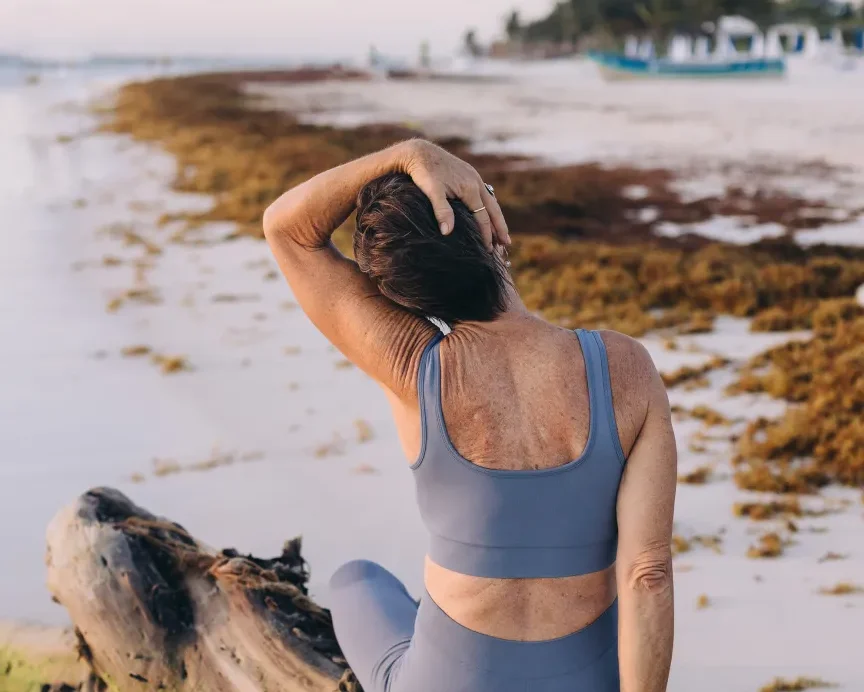
About 48 hours after you push yourself too hard on a trail run or haul a suitcase up five flights of stairs, the real pain arrives. That delayed onset muscle soreness (DOMS) peaks at the 24-72 hour mark. It’s not an injury. It’s micro-tears in muscle fibers repairing themselves. But knowing that doesn’t make sitting down on a toilet seat any less painful.
Here are six methods that actually work, ranked from most effective to least, based on current sports medicine research. No ice baths unless you genuinely enjoy suffering.
1. Active Recovery Beats Complete Rest
The worst thing you can do for sore muscles is park yourself on a couch for three days. Blood flow drops. Stiffness sets in. Recovery slows down.
Active recovery means moving the sore muscles at 30-40% of your max effort. Think walking at a casual pace, gentle cycling with zero resistance, or swimming easy laps. The goal is circulation, not performance.
A 2018 study in the Journal of Strength and Conditioning Research found that cyclists who did 20 minutes of low-intensity cycling after a hard workout reported 30% less muscle soreness 48 hours later compared to the group that sat still. The mechanism is straightforward: increased blood flow delivers oxygen and nutrients to damaged tissue while flushing out metabolic waste like lactate.
How to do active recovery on a travel schedule
You don’t need a gym. After a long hiking day, spend 15 minutes walking around your accommodation. Stretch lightly. Do some bodyweight squats without going deep. The movement should feel easy, not painful. If it hurts, you’re pushing too hard.
When to skip active recovery
If you have sharp pain rather than dull soreness, stop. Sharp pain suggests injury, not DOMS. If walking makes the pain worse instead of better, rest is the right call.
2. Foam Rolling Hurts But Works
Self-myofascial release sounds like a medical procedure. It’s just rolling a dense foam cylinder over sore muscles. It hurts during the process. It helps afterward.
Research from the University of Calgary showed that 10 minutes of foam rolling immediately after exercise reduced muscle soreness perception by about 20% over the next 48 hours. The mechanism isn’t fully understood, but it likely involves reducing muscle spindle sensitivity and breaking up adhesions between tissue layers.
The right way to foam roll sore legs
Buy a TriggerPoint Grid Foam Roller ($35-45) or a TheraBand Wave Roller ($40). Avoid the cheap $10 foam rollers from discount stores — they flatten after two weeks and provide zero pressure.
Roll each muscle group for 60-90 seconds. When you hit a tender spot, pause and breathe for 20-30 seconds. Do not roll directly on joints or bone. Do not roll your lower back — use a lacrosse ball against a wall instead.
One session per day is enough. More than that and you risk bruising the muscle tissue.
The mistake most people make
They roll too fast. Slow rolling at about one inch per second triggers the nervous system to release tension. Fast rolling just irritates the muscle. Slow down.
3. Heat Therapy Beats Ice for Soreness
Ice is for acute injuries with swelling — a sprained ankle, a torn muscle, a fresh bruise. DOMS is not an acute injury. It’s inflammation and micro-damage that needs blood flow to heal.
Heat therapy dilates blood vessels, increases circulation, and relaxes tight muscle fibers. A 2017 meta-analysis in Clinical Journal of Sport Medicine reviewed 12 studies and concluded that heat application significantly reduced DOMS compared to ice or no treatment.
Best heat application methods
Warm bath or shower (38-40°C / 100-104°F) for 15-20 minutes. A Sunbeam King Size Heating Pad ($30) on the sore area for 20 minutes. Or a microwavable moist heat pack like the Thermophore Moist Heat Pack ($55) which delivers deeper penetration than dry heat.
Do not use heat if the area is swollen, red, or hot to the touch. That signals acute inflammation, not DOMS, and heat will make it worse.
Timing matters
Apply heat before activity or stretching, not after. Heat loosens tissue. Cold numbs it. If you heat after exercise, you increase blood flow to already inflamed tissue — counterproductive.
4. Pain Relievers: A Tradeoff Worth Understanding
Ibuprofen (Advil, Motrin) and naproxen (Aleve) are non-steroidal anti-inflammatory drugs (NSAIDs). They reduce inflammation and pain. They also interfere with muscle protein synthesis.
A 2001 study in the American Journal of Physiology found that taking ibuprofen after resistance training actually blocked some of the muscle growth response. The inflammation you feel is part of the repair process. Drugs suppress it.
For occasional use — one or two days after a hard hike — NSAIDs are fine. You take 200-400mg ibuprofen with food, wait 30 minutes, and the pain drops noticeably. But relying on them for a week straight? That slows recovery and risks stomach bleeding if you exceed 1200mg daily.
A better alternative
Acetaminophen (Tylenol) at 500-1000mg every 6 hours. It doesn’t reduce inflammation, so it won’t interfere with muscle repair. It just blocks pain signals in the brain. For DOMS relief without sabotaging recovery, acetaminophen is the smarter choice.
Topical options work too. Biofreeze ($12 for a roll-on) contains menthol that creates a cooling sensation that distracts from deeper pain. Tiger Balm ($8) uses camphor and menthol for a similar effect. Neither enters your bloodstream. No side effects.
5. Compression Gear: Tight but Effective
Compression socks and sleeves apply graduated pressure to limbs, theoretically improving venous return and reducing the space for fluid accumulation. The evidence is mixed but leans positive.
A 2015 systematic review in Sports Medicine analyzed 12 studies and found that compression garments reduced DOMS by about 1 point on a 10-point pain scale. Not dramatic, but noticeable. The effect was strongest in the first 24 hours after exercise.
What to buy
CEP Progressive Compression Run Socks ($50) are the gold standard for calf soreness. They apply 20-30 mmHg of pressure, which is therapeutic range. 2XU Compression Tights ($90) work for thighs and glutes. Cheaper options like SB Sox ($15) provide less pressure but still help.
Wear compression gear during sleep after a hard workout day. That’s when the most recovery happens. Wash them after every use — sweat buildup reduces elasticity and pressure.
When compression doesn’t help
If the garment is too loose, it does nothing. If it’s too tight and leaves deep red marks after removal, it’s restricting blood flow rather than helping. You want firm but not painful pressure. If you can’t slide a finger under the fabric easily, it’s too tight.
6. Epsom Salt Baths: The Placebo That Might Work Anyway
Epsom salt is magnesium sulfate. The claim is that magnesium absorbs through skin, reduces inflammation, and relaxes muscles. The evidence for transdermal magnesium absorption is weak at best.
A 2017 study in PLOS One measured magnesium levels in blood after Epsom salt baths. They found a small increase, but not enough to explain the reported pain relief. The warm water alone likely does most of the work.
That said, people report real relief. If the ritual of soaking in warm water with salts helps you relax, it’s worth doing. The placebo effect is still an effect. Your brain releases endorphins when you believe something will help. Those endorphins reduce pain perception.
How to do it right
Use 2 cups of Dr. Teal’s Epsom Salt ($5 for 3 pounds) in a warm bath. Soak for 20 minutes max — longer than that dehydrates you. Drink water before and after. Add 10 drops of lavender essential oil if you want the relaxation effect to kick in faster.
Do not use Epsom salts if you have open wounds, severe skin conditions, or kidney problems. The magnesium can accumulate in people with impaired kidney function.
The honest verdict
If you have $5 and 20 minutes, try it. The warm bath alone provides relief. If you’re expecting a scientifically proven muscle recovery tool, you’ll be disappointed. It’s a comfort measure, not a medical treatment.
7. When Soreness Becomes a Problem
Most muscle soreness resolves on its own within 72 hours. But some symptoms require medical attention.
| Symptom | What It Might Be | What To Do |
|---|---|---|
| Pain that lasts more than 7 days | Muscle strain or tear | See a doctor. Rest completely. No exercise on that muscle. |
| Dark brown or cola-colored urine | Rhabdomyolysis — muscle tissue breaking down and releasing toxins into blood | Go to emergency room immediately. This can cause kidney failure. |
| Severe swelling in one leg only | Deep vein thrombosis (blood clot) | Go to emergency room. Do not massage the leg. Do not walk on it. |
| Pain accompanied by fever or red streaks on skin | Infection | See a doctor within 24 hours. |
These are rare. The vast majority of post-exercise soreness is normal and safe. But knowing the warning signs prevents bad outcomes.
The most common mistake travelers make is ignoring sharp pain and pushing through it. DOMS is dull, diffuse, and symmetrical — both legs hurt, not just one. If pain is sharp, localized to one spot, or came on suddenly during an activity, you likely have an injury, not soreness.
Rest that area for 48 hours. If it still hurts after that, get it checked. Continuing to exercise on an injured muscle turns a 2-week recovery into a 2-month one.
For most travelers dealing with post-hike or post-exercise soreness, the best protocol is this: walk gently for 15 minutes the next morning, foam roll each sore muscle group for 60 seconds, take a warm shower, wear compression socks during your flight or long car ride, and take 500mg acetaminophen if the pain interferes with sleep. Skip the ice. Skip the ibuprofen unless you absolutely need it. Your muscles will repair themselves faster if you keep moving gently and don’t drug the inflammation away.