I’ve washed my hair with bottled water in a Moroccan riad, tried to detangle knots on a sleeper train in Vietnam, and watched my carefully styled waves collapse into frizz within five minutes of stepping off a plane in Bangkok. After a decade of this, I can tell you one thing for sure: most hair care advice is written for people who stay in one place. The rest of us need a different playbook.
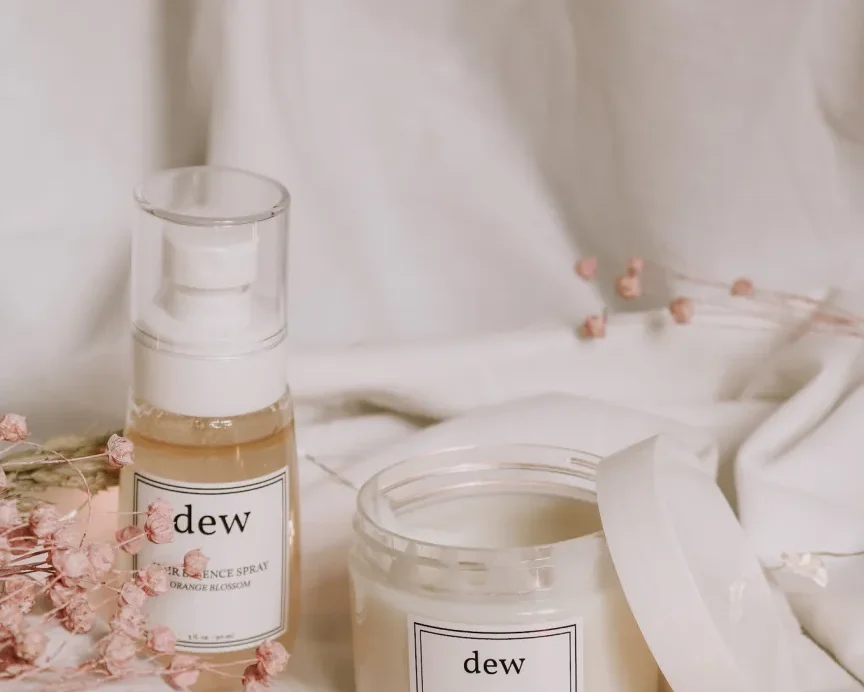
Here’s what I’ve learned, the products that survived my carry-on, and why Dew — that tiny handheld mister — is the only thing I pack every single trip.
Why Your Hair Freaks Out When You Travel (And What Actually Works)
Your hair doesn’t care about your itinerary. It reacts to three things: humidity, water hardness, and air pressure. Every flight, every train, every new shower changes those variables.
The Three Travel Hair Killers
1. Low humidity on planes. Cabin humidity sits around 10-20%. Your hair loses moisture fast. Cuticles lift, strands get brittle, and by hour four you look like you stuck your finger in a socket.
2. Hard water in hotels. Most hotels (especially in Europe and Asia) have hard water. Calcium and magnesium build up on your hair. Shampoo doesn’t lather well. Your hair feels waxy or straw-like after one wash.
3. Humidity at your destination. Walk off a plane into 80% humidity and your hair absorbs water molecules. The cuticle swells unevenly. Frizz appears within minutes.
Most people try to fix this by buying travel-size versions of their home routine. Big mistake. The problem isn’t your shampoo — it’s the environment. You need tools that adapt to the conditions, not products that pretend every shower is the same.
The single most effective solution I’ve found is a fine-mist spray bottle filled with distilled water. I use the Dew mister ($25, holds 50ml, fits any airport liquid bag). Mist your hair before you get off the plane. Mist it when you check into your hotel. Mist it before you step outside. The water rehydrates the cuticle and resets the moisture balance. It’s not magic — it’s basic physics.
The 9-Step Routine I’ve Refined Over 40 Countries
I don’t do this every day. Some days I just throw it in a bun and go. But when I want my hair to actually look good — for a work call, a dinner, a photo — this is the exact sequence.
Step 1: Pre-Treat Before the Flight
Thirty minutes before boarding, I apply a lightweight leave-in conditioner. My pick is Briogeo Farewell Frizz Blow-Dry Perfection & Heat Protectant Creme ($28, 177ml). It’s silicone-free, so it won’t build up, and it contains rosehip oil and shea butter. I work a pea-sized amount through damp ends, then let it air-dry. This creates a barrier against cabin air.
Step 2: Mist Immediately After Landing
Before I even leave the airport, I spritz my hair with the Dew mister loaded with distilled water. Three pumps. Not enough to soak it — just a fine veil. Then I scrunch gently with a microfiber towel. This rehydrates the cuticle after the flight. If I skip this, my hair looks flat and stringy within an hour.
Step 3: Wash With a Chelating Shampoo (Once Every 3 Washes)
Hard water buildup is real. Regular shampoos don’t remove mineral deposits. I use Ouai Detox Shampoo ($32, 300ml) once every third wash. It contains apple cider vinegar and chelating agents that bind to calcium and magnesium. Lather is minimal — that’s normal. Leave it on for two minutes. The difference is immediate: hair feels cleaner, lighter, and actually absorbs conditioner afterward.
Step 4: Condition With a pH-Balanced Formula
Most hotel conditioners are pH 7 or higher. Hair’s natural pH is 4.5-5.5. Use something acidic to close the cuticle. Olaplex No. 5 Bond Maintenance Conditioner ($30, 250ml) sits at pH 4.8. It’s also lightweight enough for fine hair but hydrating enough for thick strands. Apply from mid-length to ends, leave for three minutes, rinse with cool water.
Step 5: Apply a Heat Protectant (Even If You’re Not Using Heat)
UV rays damage hair. So does wind. So does friction from scarves and hoods. I use Living Proof No Frizz Humidity Shield ($29, 120ml) as a daily styling cream. It contains a patent-pending molecule that forms a flexible shield around each strand. One pump, emulsify between palms, smooth over damp hair. It blocks humidity for up to 12 hours.
Step 6: Air-Dry With a Microfiber Towel
Regular towels cause friction and breakage. I carry a Aquis Lisse Luxe Hair Turban ($30, one size). It’s made from microfiber with a waffle weave that wicks water without roughing up the cuticle. Wrap it for 10 minutes. Then let hair air-dry the rest of the way. No blow-dryer unless I’m in a hurry.
Step 7: Mist Again Before Styling
If my hair is fully dry and I want to restyle it (re-waves, refresh curls), I spritz with Dew again. Two pumps. This re-activates the humidity shield and makes the hair pliable without re-wetting it completely.
Step 8: Sleep on Silk
Cotton pillowcases absorb moisture and create friction. I pack a Slip Silk Pillowcase ($89, standard size). Pure mulberry silk, 22 momme weight. My hair looks significantly less tangled in the morning. I also use a loose braid or a pineapple bun if my hair is long.
Step 9: Deep Condition Once a Week
On longer trips (2+ weeks), I do a deep conditioning mask. Amika The Kure Intense Repair Mask ($36, 250ml) is my go-to. Contains sea buckthorn oil and ceramides. Apply to clean, damp hair, leave for 10 minutes, rinse. This repairs cumulative damage from flights, sun, and hard water.
What Most Travel Hair Advice Gets Wrong
I’ve read dozens of blog posts telling me to “use a clarifying shampoo” or “always wear a hat.” That advice is technically correct but practically useless. Here’s what I actually see fail in real travel conditions.
| Common Advice | Why It Fails | What Actually Works |
|---|---|---|
| “Use a clarifying shampoo every wash” | Clarifying shampoos strip natural oils. Overuse causes frizz and dryness, especially in dry climates. | Use a chelating shampoo only every 3 washes. Ouai Detox or Bumble and Bumble Sunday Shampoo. |
| “Always air-dry” | In humid climates, air-drying gives frizz more time to develop. The cuticle stays open longer. | Air-dry with a humidity shield applied first. Living Proof No Frizz or Color Wow Dream Coat. |
| “Pack travel-size products” | Travel sizes are expensive per ounce and often contain different (cheaper) formulations. | Decant your regular products into reusable silicone bottles. I use Humangear GoToob+ ($12 for 3-pack). |
| “Wash hair less often” | In hard water areas, skipping washes means mineral buildup accumulates faster. Hair gets dull. | Wash with a chelating shampoo on a schedule. Dry shampoo only on day 2 or 3. |
The core problem is that generic advice ignores the specific conditions you’re actually dealing with. A clarifying shampoo might work in New York’s soft water. In Paris’s hard water, it makes things worse.
When NOT to Use Dew (And What to Use Instead)
I love my Dew mister. But it’s not for every situation. Here’s when I leave it in the bag.
When you’re in extreme humidity (80%+). Adding more water to already-saturated hair can make frizz worse. Instead, use a humidity-blocking serum like Color Wow Dream Coat Supernatural Spray ($28, 200ml). It contains a polymer that seals the cuticle against moisture absorption. Spray on damp hair before styling.
When your hair is chemically damaged. Bleached or permed hair has compromised cuticles. Adding water without protein can cause hygral fatigue — the hair swells and contracts too much, leading to breakage. Use a protein treatment instead. Olaplex No. 3 Hair Perfector ($30, 100ml) applied before shampooing for 10 minutes.
When you’re in a dry, cold climate. Mist evaporates quickly in low humidity and can leave hair feeling stiff. Use a heavier leave-in cream. Moroccanoil Weightless Hydrating Mask ($38, 250ml) as a leave-in for extra moisture retention.
When you have fine, straight hair. Over-misting can make fine hair look greasy or weighed down. Stick to one spritz at the roots only, or skip Dew entirely and use a dry shampoo at the roots instead. Living Proof Perfect Hair Day Dry Shampoo ($12, 92ml) absorbs oil without white residue.
The key is knowing your hair’s porosity and current condition. If your hair is high-porosity (absorbs water quickly, dries slowly), Dew is your best friend. If it’s low-porosity (repels water, takes forever to dry), use it sparingly.
How I Pack My Hair Kit for Any Trip
I’ve refined this to a single pouch that fits in a personal item. Total weight: under 500g. Total cost: about $150.
- Dew mister (filled with distilled water from a pharmacy at destination) — $25
- Ouai Detox Shampoo (decanted into a 50ml GoToob) — $32 full size
- Olaplex No. 5 Conditioner (decanted into a 50ml GoToob) — $30 full size
- Living Proof No Frizz Humidity Shield (original tube, 120ml) — $29
- Aquis Lisse Luxe Hair Turban — $30
- Slip Silk Pillowcase (folds flat) — $89
- Bumble and Bumble Dry Shampoo Powder (travel size, 28g) — $14
That’s it. Seven items. Covers every climate, every water type, every hair crisis I’ve encountered. I don’t pack a blow-dryer — most hotels have one, and if they don’t, I air-dry. I don’t pack a flat iron — if my hair is healthy, it looks good natural.
One pro tip: buy distilled water at a local pharmacy when you arrive. Don’t carry it on the plane. It’s heavy and TSA will question it. In Europe, ask for “eau distillée” or “acqua distillata.” In Asia, convenience stores often carry it. Costs about $1-2.
My Verdict After 10 Years
If you only buy one thing from this list, buy the Dew mister. It costs $25. It weighs nothing. It fits in your jeans pocket. And it solves more travel hair problems than any single product I’ve ever used.
Everything else — the shampoos, the conditioners, the silk pillowcase — those are optimizations. They make good hair great. But the Dew is the foundation. It’s the difference between arriving at your destination looking like you just stepped out of a salon versus looking like you slept in a cargo hold.
I’ve recommended it to dozens of fellow travelers. Everyone who actually uses it (not just buys it and forgets it) comes back and thanks me. The ones who don’t use it? They keep buying travel-size serums that don’t work.
For most travelers with normal to wavy hair, the Dew + Living Proof No Frizz + Olaplex No. 5 is the best $84 you’ll spend on your hair all year. For curly or coily hair, swap the Living Proof for a heavier cream like SheaMoisture Curl Enhancing Smoothie ($12, 340ml) and keep the Dew. For fine straight hair, skip the cream entirely and just use the Dew with a lightweight leave-in like It’s a 10 Miracle Leave-In Product ($22, 148ml).
That’s the real lesson: no single routine works for everyone. But the principle — rehydrate your hair when the environment dries it out, protect it when the environment saturates it — is universal. Dew handles the first part better than anything I’ve found. The rest is just details.