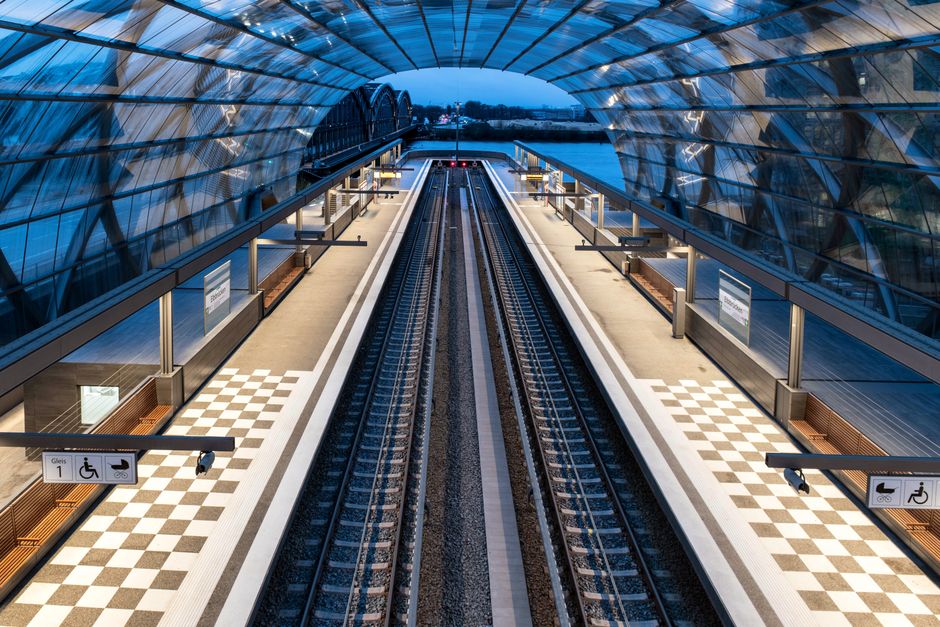
For an older traveler, European rail travel works best when the journey leaves room for meals, rest, and the occasional delayed connection. The right plan is not the one with the most cities; it is the one that keeps transfers simple while still giving you memorable places to explore.
Rail travel in Europe works best with fewer bases
My verdict: choose rail travel if you value scenery, central stations, and the freedom to avoid airport transfers. The strongest senior-friendly trips use two or three overnight bases rather than a new hotel every night. That choice reduces staircases, taxi rides, packing, and the risk of missing a connection.
The best daily rhythm
Plan one major rail journey every two or three days. A travel day of three to five hours is usually manageable when you book a reserved seat, carry a small day bag, and avoid a same-day tour at the destination. Keep the first day light. Arrive, check into the hotel, eat nearby, and save sightseeing for the following morning.
| Trip element | Senior-friendly target | Why it works |
|---|---|---|
| Long rail journey | 3 to 5 hours | Enough time to move between regions without exhausting the day |
| Connections | 30 to 60 minutes | Allows time for platforms, lifts, toilets, and a slow walk |
| Hotel changes | Every 2 or 3 nights | Less packing and fewer unfamiliar stations |
| Sightseeing | One major site plus one flexible activity | Leaves energy for meals and rest |
Who should choose a different option
Rail is not automatically the easiest choice for someone who cannot manage stairs, has a tight medication schedule, or needs door-to-door assistance at every stage. A small-group tour, private transfer, or one-city stay may be better. Rail travel gives independence, but independence still requires planning. The goal is not to prove that you can handle every connection. The goal is to make the trip pleasant enough that you want to take the next train.
A rail pass is not always the cheapest choice

Passes solve a planning problem, not every price problem. For a senior traveler visiting several countries, the Eurail Global Pass Senior can be a sensible starting point: Eurail classifies travelers aged 60 and over as seniors and advertises a 10% senior reduction on eligible passes. The pass is for non-European residents. European residents should compare the Interrail Global Pass Senior, which uses a similar senior age threshold. Check the current rules at Eurail’s senior pass page before buying.
| Payment choice | Best use | Main drawback |
|---|---|---|
| Eurail Global Pass Senior | Non-European visitors covering several countries | Some high-speed trains still require paid reservations |
| Interrail Global Pass Senior | European residents taking several long-distance journeys | Country-of-residence rules apply |
| Point-to-point tickets | Two or three fixed journeys booked early | Cheap fares may be tied to one train |
| DB Senioren BahnCard 50 | Frequent travel within Germany for travelers aged 65 and over | It is mainly a German discount card, not a Europe-wide pass |
When the German card wins
The DB Senioren BahnCard 50 is a strong example of a local card beating a continental pass. Deutsche Bahn lists a 50% reduction on Flexpreis fares and 25% on many saver fares. Its 2026 promotional price was €99 for second class through July 31, 2026, while the standard price table listed €122. That makes sense for repeated German journeys, not for a single Berlin-to-Munich return.
How to check the break-even point
Price every planned train without a pass, then add likely reservation fees to the pass cost. If you will take only two or three long journeys, advance tickets often win. If you want flexibility across several borders, the pass may justify its higher upfront price. Do not buy a pass simply because the word “senior” appears beside it.
Build a senior-friendly route around two-night stays
A good route has a gentle shape. Start with cities that are easy to reach, spend enough time in each place to recover from the journey, and avoid crossing a border on the same day as a major tour or medical appointment. The first principles are simple: every transfer takes physical effort, every hotel move creates uncertainty, and every extra destination reduces time in the places you already paid to reach.
Use a three-city pattern
For a first trip, choose three bases connected by direct or near-direct rail. Paris, Strasbourg, and Basel create a manageable western route. Amsterdam, Cologne, and Vienna offer another option, although the final leg is longer. Milan, Verona, and Venice keep the journey within one broad region. These examples are not a ranking. They show the value of a route that moves in one direction instead of forcing repeated backtracking.
Protect the difficult travel days
Put your longest journey after a restful night, not after an evening flight or a full day of sightseeing. Avoid connections under 20 minutes, even when a booking engine recommends them. A missed train can mean a new reservation, a crowded platform, or a long wait while standing. A 45-minute connection with lifts and clear signage is usually worth more than a 12-minute connection that looks efficient on paper.
Book hotels for the station, not the postcard view
A hotel five minutes from a main station can be a better base than one beside a famous monument. Look for an elevator, a walk-in shower, luggage storage, and a breakfast that starts early enough for your train. Ask the hotel to confirm the number of stairs between the entrance, lift, room, and breakfast area. “Central” does not always mean accessible; historic buildings often have narrow steps and uneven floors.
Accessibility is won before you reach the station
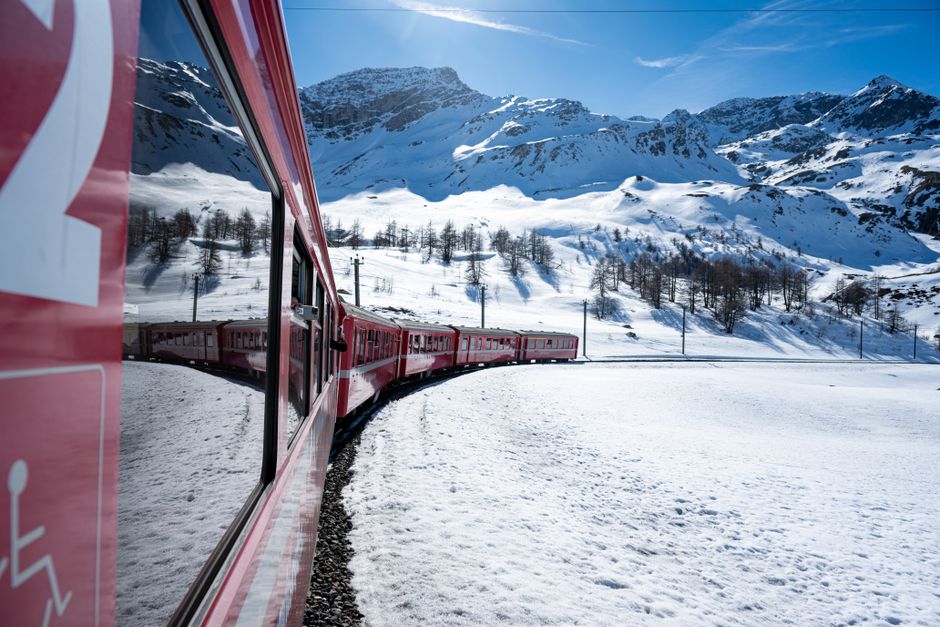
Mobility planning is not only for wheelchair users. It also helps travelers who walk slowly, use a cane, tire easily, or need extra time with luggage. Ask for help before buying the ticket if you need boarding assistance. Some operators require advance notice, and an unplanned request at the station may not be available for the train you selected.
- Describe the actual limitation. Say whether you can climb stairs, walk 200 meters, stand for 15 minutes, or board without support. “Senior passenger” alone does not tell staff what help you need.
- Record every station detail. Save the departure platform, arrival station, lift location, and connection time in one note. A printed copy is useful if your phone battery fails.
- Choose seats near practical facilities. Request an aisle seat, a lower-level carriage when possible, and a place close to the toilet without sitting beside the door.
- Keep luggage below the shoulder. Two small bags are easier to manage than one heavy case. A 20-kilogram suitcase may be within the stated limit but still be unsafe to lift onto a train rack.
- Build in an exit plan. Carry the hotel address, emergency contacts, medication list, and travel insurance details. If a connection fails, you should be able to explain your needs without searching through email.
For a concrete example, Eurostar asks passengers seeking guaranteed assistance to book at least 24 hours in advance and arrive 60 minutes before departure. Other operators use different rules, so check the carrier for each separate leg. A promise from one railway does not automatically cover the next country.
Five booking mistakes cause most senior rail stress
Do I need a reservation with a rail pass?
Often, yes. A pass can cover the journey but still require a separate seat reservation on busy high-speed or international services. The common mistake is treating the pass as a complete ticket. Check the reservation requirement for every train before activating the pass. If the reservation fee is high or the train is nearly full, compare a normal advance ticket.
Should I book the cheapest fare?
Only if the schedule is firm. The lowest fare may lock you to one departure and charge a fee for changes. A flexible ticket can cost more but protect a traveler who may need a slower morning, a rest day, or a different connection. For a major trip, flexibility is part of the travel budget.
Is first class always worth paying for?
No. First class can bring wider seats and a quieter carriage, but it does not guarantee a lift, an accessible platform, or help with a suitcase. Pay for it on the longest journey if comfort matters. Spend the rest on a better-located hotel or a private transfer from the station.
What happens if a connection is missed?
Do not leave the station until you ask staff about the ticket conditions. A flexible fare may allow the next train. A compulsory reservation may require a new seat. Take a screenshot of the original booking, and keep the train number rather than relying only on the departure time.
What should I verify before payment?
Check names, dates, station codes, class, luggage rules, refund terms, and the number of changes. A large city may have several stations. Paris Gare du Nord and Paris Gare de Lyon are not interchangeable, and London St Pancras is not the same as London Euston. No U.S. state law is being analyzed here. This is not legal advice — consult a licensed attorney if a disability, refund, or contract dispute affects your trip.
My pick: a 10-day, three-city rail trip
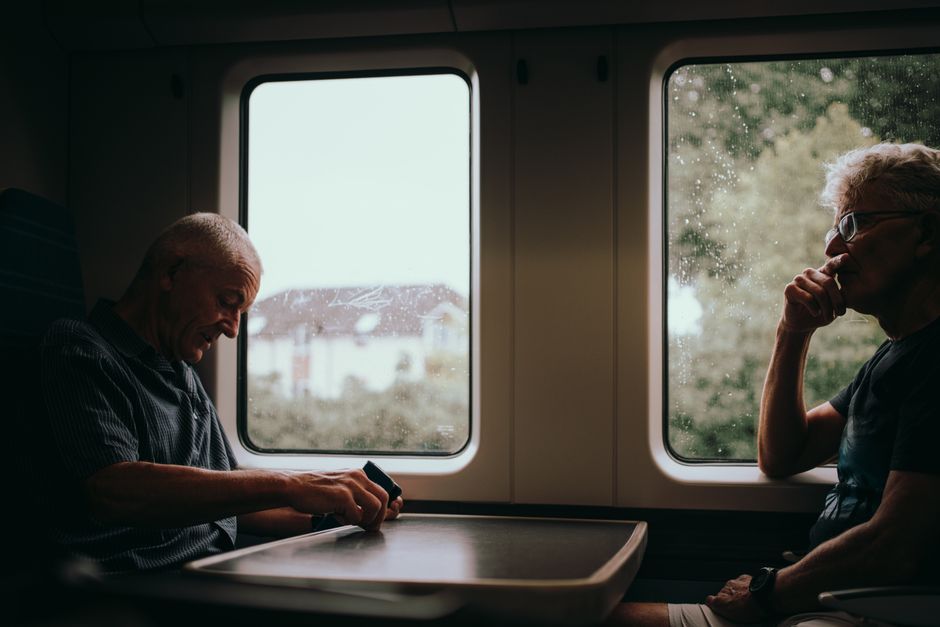
For most senior citizens planning a first European rail holiday, I recommend three cities over 10 days, with two full days in each and one flexible day for delays or rest. Buy point-to-point tickets when the route has only a few fixed journeys. Choose the Eurail Global Pass Senior or Interrail Global Pass Senior when several countries and flexible departures matter more than the lowest possible fare. Choose the DB Senioren BahnCard 50 only when Germany is the real center of the trip.
Reserve the longest trains first. Book hotels within easy reach of the station. Leave at least 30 minutes for ordinary connections and more for a border crossing or a station you have never used. Keep the final day close to your departure airport or homeward train, so one delay does not threaten the entire journey.
The traveler who begins with a crowded itinerary may imagine Europe as a race between platforms. A slower plan changes the experience: the train becomes the comfortable middle of the day, the hotel becomes a base rather than a place to collapse, and each city has enough time to feel real. That is the version of rail travel senior citizens are most likely to enjoy and repeat.