
Most solo travel advice assumes you’re an extrovert. It tells you to “just say hi” to strangers in a hostel bar. For a shy introvert, that advice is useless. It’s like telling someone afraid of heights to “just jump.”
Here’s the truth: you don’t need to be loud, drunk, or fake to connect with people on the road. You need the right context. This guide gives you specific, low-pressure strategies that work for quiet travelers.
Why Hostels Aren’t the Only Option (And Often the Worst for Introverts)
Every solo travel blog pushes hostels as the default social scene. For introverts, a crowded hostel common room can feel like a party you weren’t invited to. The noise, the pressure to perform, the expectation to join group activities — it’s exhausting.
Hostelworld lists over 36,000 properties. But only a fraction cater to quiet travelers. Look for hostels that advertise “quiet hours,” have separate reading lounges, or are smaller (under 50 beds). A 400-bed party hostel in Barcelona will drain you. A 12-bed guesthouse in a small town won’t.
The real alternative: guesthouses and B&Bs. You still get shared spaces (breakfast tables, gardens), but the atmosphere is calmer. Owners often introduce guests to each other. You can talk to 2-3 people over coffee instead of shouting over reggaeton.
Another option: coliving spaces like Outsite or Selina. They’re designed for digital nomads, not backpackers. Quiet work areas, structured social events (cooking classes, hikes), and a general vibe that says “we work during the day.”
When a Hostel Works
If you must stay in a hostel, book a private room. You get the social access (common room, events) without the sensory overload of a dorm. You can retreat when you need to. That control makes it easier to actually talk to people.
Structured Activities Remove the Awkwardness

The #1 mistake shy travelers make: expecting spontaneous friendship to happen. It rarely does. You need a structure where conversation is natural, not forced.
Free walking tours are the best tool here. You join a group with a shared interest (the city’s history, architecture, food). The guide does the talking. You just walk and listen. After 90 minutes, you’ve had 3-4 casual exchanges with other travelers — “where are you from?” “what’s your favorite spot so far?” That’s enough to ask someone for coffee after.
Other structured options:
- Food tours — eating together lowers social barriers. You’re focused on the food, not on finding things to say.
- Cooking classes — you work side-by-side. Conversation happens naturally while chopping vegetables.
- Day hikes with a guide — physical activity + shared scenery = easy bonding. No awkward eye contact.
- Volunteer shifts — animal shelters, farm stays, community projects. You’re there to work, not socialize. Friendships form organically over shared tasks.
How to Find These Activities
Use Meetup (still active in most major cities), Airbnb Experiences (filter by “social” or “small group”), and local Facebook groups. Search “free walking tour [city name]” — every major tourist city has one. They’re tip-based, usually $10-20.
The 3-Question Rule for Low-Stress Conversation
Small talk is exhausting because you’re constantly thinking “what do I say next?” Stop planning. Use a script.
The 3-Question Rule: Prepare exactly three questions you can ask anyone. Memorize them. Use them in any social setting. When you run out, you’re allowed to leave.
- “Where are you from, and what made you come here?” (opens story, not just fact)
- “What’s been the best thing you’ve done so far?” (positive, easy to answer)
- “What’s one thing you’d recommend I not miss?” (gives you a follow-up action)
That’s it. Three questions. After the third, you can say “thanks, I’m going to grab a seat” or “nice meeting you, enjoy your trip.” No guilt. You did the social thing. You’re done.
Pro tip: Ask questions that require more than a yes/no. “Do you like this city?” gets a dead-end “yes.” “What’s surprised you most about this city?” gets a real answer.
The Solo Diner Strategy (Eat at the Bar)

Eating alone in a restaurant feels exposed. You’re sitting at a table for two, staring at your phone, while couples and groups chatter around you. That’s a setup for anxiety.
Eat at the bar. Counter seating changes everything. You’re side-by-side with other solo diners, not face-to-face. The bartender or chef is right there. You can comment on the food, ask for recommendations, or just watch them work. It’s lower stakes.
Best cities for this: Tokyo (ramen counters are designed for solo eaters), New York (diner culture), London (pub counters), Lisbon (tasca counters). In each, the bartender expects to chat. You can practice the 3-question rule with them first.
What to Do If You’re Too Nervous to Start
Bring a book or a notebook. It signals “I’m fine being alone.” People will approach you more often because you look approachable — you’re not glued to your phone with closed-off body language. A physical book is a conversation starter. Someone will ask “what are you reading?”
Common Mistakes That Keep You Alone
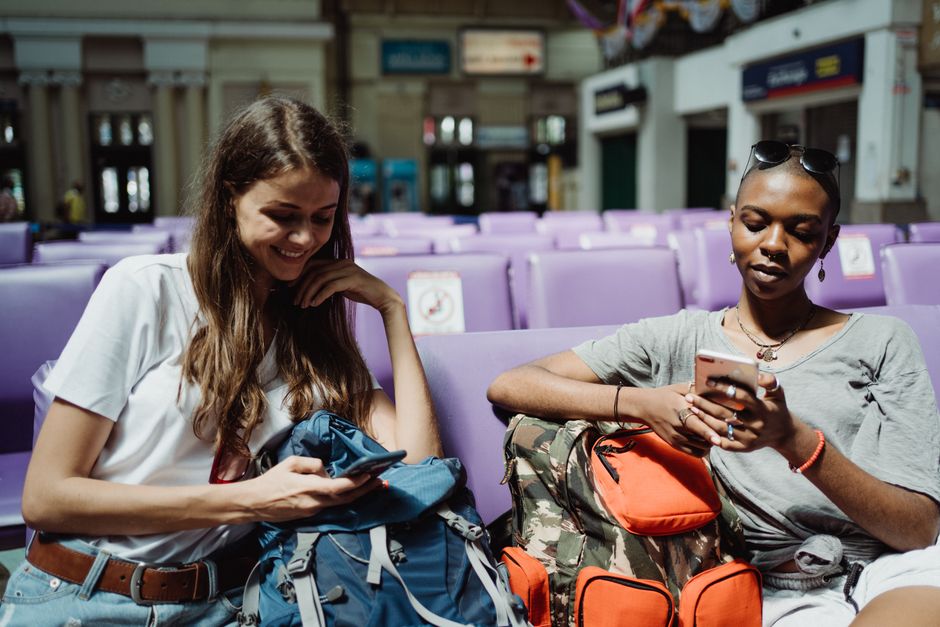
Most shy travelers sabotage themselves without realizing it. Here’s what to stop doing.
| Mistake | Why It Fails | Better Approach |
|---|---|---|
| Staying in your room | Zero exposure = zero chance. You’re hiding from the problem. | Spend 30 minutes in the common area with a book. Just exist there. That’s enough. |
| Only using your phone | Closed body language. People won’t interrupt a screen. | Put the phone away in shared spaces. Look around. Make eye contact once. |
| Waiting for others to approach you | Other shy people are also waiting. Nothing happens. | Use the 3-question rule. You initiate once, then let them carry it. |
| Overcommitting to plans | You say yes to a 4-hour group dinner, then panic and cancel. | Start with 30 minutes. “I can join for a coffee but need to go after.” Low commitment = less anxiety. |
| Staying in tourist bubbles | Everyone’s overwhelmed. No one connects deeply. | Go to a neighborhood cafe, not the main square. Locals and long-term travelers are calmer. |
The biggest mistake: Thinking you need to change your personality. You don’t. You just need better systems. A quiet person with a plan connects more than a loud person with no strategy.
One more thing: Couchsurfing (the app, not just free stays) has a “hangouts” feature where you post “I’m at this cafe, join if you want.” Zero pressure. You show up. If someone comes, great. If not, you had coffee alone — which you were going to do anyway.
That’s the whole trick. Design situations where connection is optional. Then it happens naturally.