
Which travel credit card actually delivers on its promises when you are standing at a crowded check-in counter in Tokyo or trying to book a last-minute flight from London? If you spend any time in communities like r/CreditCards or r/Travel, you know that the glossy advertisements often hide the friction of real-world use. Reddit users tend to be ruthless. They don’t care about the celebrity spokesperson; they care about the transfer ratios, the ease of using a travel portal, and whether the annual fee is actually offset by tangible benefits. Selecting a card is not just about the sign-up bonus—it is about how that card fits into your specific spending patterns over the next three to five years.
The research suggests a massive divide between what traditional financial sites recommend and what the seasoned travelers on Reddit actually carry in their wallets. While a blog might push a card because of a high affiliate commission, a Redditor will tell you that a certain card’s customer service is a nightmare when an international flight gets canceled. This analysis looks at the current consensus across the most active finance subreddits to identify which cards are truly worth the slot in your passport holder.
Why Reddit’s Consensus on Travel Cards Usually Beats Standard Financial Advice
Standard financial advice often prioritizes the highest headline sign-up bonus. Reddit, however, prioritizes the “keeper card”—a product that provides more value than its annual fee costs, year after year. In the r/CreditCards community, the discussion frequently revolves around the concept of a “setup” or a “trifecta.” This is the practice of using multiple cards from the same issuer to maximize points across different spending categories like dining, groceries, and travel. For example, a user might use one card for 3x points on dining and another for 2x points on everything else, then pool those points into a single travel-focused account.
The “Keeper Card” Philosophy vs. The Churning Mindset
There is a distinct difference between the advice on r/churning and r/CreditCards. Churners are looking for a quick hit: open a card, hit the minimum spend, grab 75,000 miles, and close the card before the second annual fee hits. For the average traveler, this is too much administrative work. The Reddit consensus for most people is to find a card with a sustainable fee structure. A card like the Chase Sapphire Preferred (approximate annual fee: $95) is frequently cited as the gold standard for beginners because its fee is low enough to justify keeping it for a decade, yet it still allows for 1:1 point transfers to valuable partners like Hyatt and United Airlines.
Avoiding the “Coupon Book” Trap in Premium Cards
A common complaint on Reddit regarding premium cards, specifically the American Express Platinum Card (approximate annual fee: $695), is that they have become “coupon books.” To justify the nearly $700 fee, you have to track and use dozens of smaller credits: $20 for digital entertainment, $15 for Uber, $200 for specific airline incidentals, and even a credit for a luxury gym membership. Redditors often warn that if you weren’t already spending money on those specific services, you aren’t actually saving money—you’re just pre-paying for things you don’t need. The deep research suggests that for a traveler who values simplicity, these high-fee cards can often be a net negative if the user isn’t organized enough to extract every cent of value.
Reddit users often calculate “Effective Annual Fee.” If a card costs $395 but gives you a $300 travel credit, the effective fee is only $95. This is the metric that matters more than the sticker price.
Comparing the Top-Rated Travel Cards Recommended by Reddit Communities
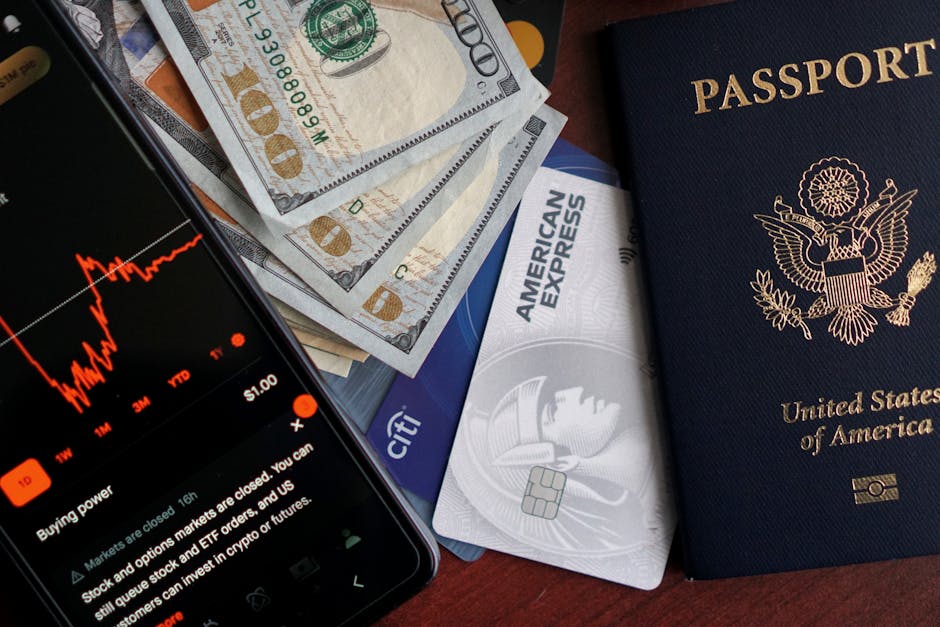
When you aggregate thousands of comments from the past year, three specific cards consistently rise to the top of the recommendation list. Each serves a different type of traveler, from the budget-conscious backpacker to the luxury seeker who wants lounge access and concierge service. The following comparison breaks down the cards that Reddit users actually put their own money behind.
| Card Name | Approx. Annual Fee | Top Pro (Reddit Consensus) | Top Con (Reddit Consensus) |
|---|---|---|---|
| Chase Sapphire Preferred | $95 | Best transfer partners (Hyatt) | Poor earning rate on daily spend |
| Capital One Venture X | $395 | Credits offset the fee entirely | Must use portal for $300 credit |
| Wells Fargo Autograph | $0 | High multipliers, no fee | Limited transfer partners |
| Amex Platinum | $695 | Superior lounge network | Extremely high “sticker shock” fee |
The Entry-Level Gold Standard: Chase Sapphire Preferred
The Chase Sapphire Preferred remains the most recommended “first” travel card. The reasoning is simple: the points (Ultimate Rewards) are easy to use. While other programs require you to search for obscure international airline availability to get good value, Chase allows you to transfer points to Hyatt at a 1:1 ratio. On Reddit, it is widely accepted that Hyatt points are worth roughly 2 cents each, meaning a 60,000-point bonus is worth $1,200 in hotel stays. Pro: Excellent travel insurance, including primary rental car coverage, which can save you $20 a day at the rental counter. Con: The card only earns 1x point per dollar on general purchases, which is significantly lower than competitors that offer 2x.
The Value King: Capital One Venture X
If you ask r/CreditCards for a premium card recommendation, the Capital One Venture X (approximate annual fee: $395) is the current darling. This is because of the math. The card provides a $300 annual credit for bookings made through Capital One Travel and gives you 10,000 bonus miles (worth at least $100) every year on your anniversary. Essentially, Capital One is paying you $5 a year to hold the card. Pro: Unlimited Priority Pass lounge access for the cardholder and up to four authorized users (who can be added for free). Con: You are forced to use the Capital One travel portal to get the $300 credit, which some users find frustrating if prices are higher than booking direct.
The No-Fee Contender: Wells Fargo Autograph
For those who refuse to pay an annual fee, the Wells Fargo Autograph has recently disrupted the market. It earns 3x points on travel, gas, dining, streaming, and phone plans. For a $0 fee card, this earning structure is almost unheard of. Pro: No foreign transaction fees, making it a perfect backup card for international trips. Con: The transfer partners are currently much weaker than Chase or Amex, meaning your points are mostly useful for cash back or travel portal bookings rather than high-value business class flights.
Maximizing Redemption Value Through Strategic Transfer Partners


The real secret to travel cards—one that Reddit users obsess over—is “transfer partners.” You should almost never use your points to buy a flight through the bank’s own portal. Instead, you transfer those points to an airline’s frequent flyer program. This is where the “Deep Researcher” finds the most value. While the bank portal might give you 1 or 1.25 cents per point, transferring to an airline like Virgin Atlantic or Air France can sometimes yield 3, 4, or even 8 cents per point if you are booking a premium cabin.
Why Hyatt and International Airlines Offer the Best Cents-Per-Point
Reddit users frequently point out that domestic US airlines (Delta, United, American) have devalued their points significantly over the last three years. It now often costs 50,000+ miles for a simple domestic economy flight. However, international partners like Air France-KLM Flying Blue often have “Promo Rewards” where you can fly from the US to Europe for 15,000 to 20,000 miles. Similarly, World of Hyatt remains the only hotel program where a high-end luxury resort might cost 30,000 points, whereas a similar Marriott or Hilton property would cost 100,000 points. This disparity is why the Chase ecosystem is still favored by the Reddit community despite having lower earning rates on daily spend than Amex or Capital One.
To maximize these transfers, follow these steps often shared in r/awardtravel:
- Identify your destination and check for “award space” on airline websites before you transfer any points. Transfers are one-way; you cannot move them back to the bank.
- Use a tool like Point.me or Roame.travel (often discussed in Reddit threads) to see which airline partner is charging the fewest miles for your specific route.
- Look for transfer bonuses. Banks frequently offer a 20% or 30% bonus when moving points to specific partners like British Airways or Marriott.
- Book as far in advance as possible (usually 330 days) or very last minute (within 14 days) for the best availability.
Navigating Foreign Transaction Fees and International Acceptance
Another major point of discussion on Reddit is the difference between Visa/Mastercard and American Express when traveling abroad. While the Amex Gold or Platinum cards offer great points on dining, their acceptance in Europe and Asia is still spotty at smaller merchants. Redditors almost always recommend carrying at least one Visa or Mastercard with no foreign transaction fees as a backup. The Capital One SavorOne (no annual fee) is a frequent recommendation here because it earns 3% back on dining and groceries worldwide and uses the Mastercard network, which is accepted virtually everywhere. If you rely solely on Amex, you might find yourself stuck at a small bistro in Florence with no way to pay other than cash.
Furthermore, the data shows that “foreign transaction fees” (usually around 3%) can completely negate any points you earn on a trip. If you are using a card that doesn’t specifically market “No Foreign Transaction Fees,” you are essentially paying a 3% tax on every meal and souvenir. This is why cards like the Chase Sapphire Preferred and Venture X are essential for international travel; they waive these fees entirely, ensuring that your points are pure profit rather than a consolation prize for overpaying.
Ultimately, the “best” card depends on your willingness to engage with the system. If you want a “set it and forget it” card that pays for itself, the Venture X is the clear Reddit favorite. If you are willing to learn the intricacies of hotel transfer partners to get luxury stays for free, the Chase Sapphire Preferred is the better tool. The consensus is clear: avoid the hype, do the math on the effective annual fee, and always have a Visa backup in your pocket before you leave the country.