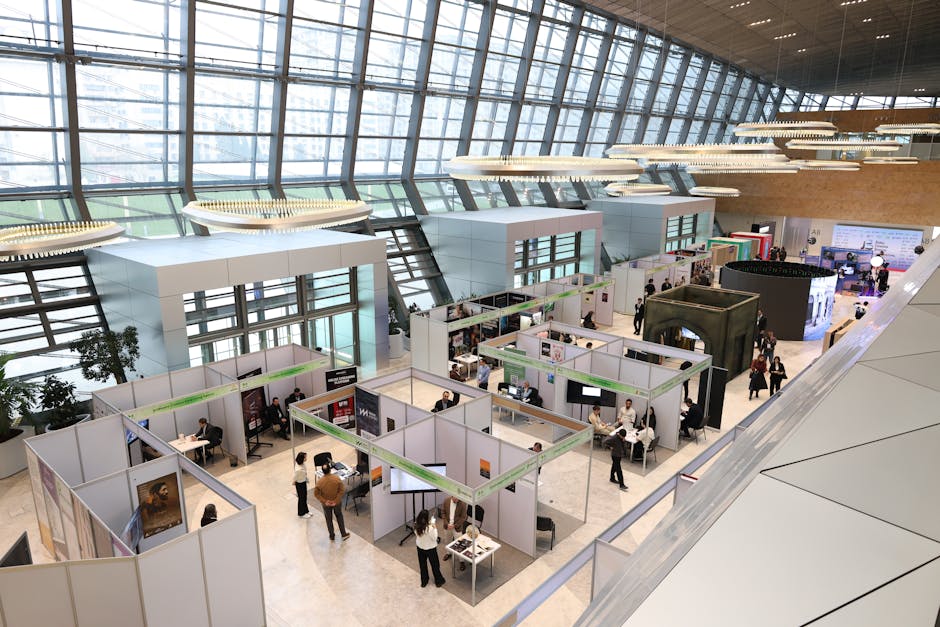
October 2018. I was standing in the corner of a windowless Marriott ballroom in Chicago, holding a plastic cup of lukewarm Chardonnay that tasted like wet pennies. I had spent $450 on a ticket and another $600 on a flight just to stand there and feel like a total loser while people in ill-fitting blazers tried to scan my badge before even looking at my face. I remember looking at a guy who was literally mid-sentence with me, but his eyes were darting over my shoulder to see if someone ‘more important’ had walked in. I left through the service exit, went back to my hotel, ordered a burger, and decided I was done with traditional networking forever. It was a complete failure, and honestly, I felt like a failure too.
The thing is, we’re told this is how it works. You go to the ‘mixer,’ you ‘mingle,’ and you ‘leverage’ your—ugh, I can’t even say it. It’s all a lie. I’ve been working for twelve years now, and I can tell you with absolute certainty that 0% of my actual career growth came from those rooms. Not one job. Not one contract. Not one useful piece of advice. It’s just a room full of people who want something, talking to other people who have nothing to give. It’s a circle of desperation.
The math of why these events suck
I’m a bit of a nerd, so I actually tracked this. Over a five-year period, I attended 14 traditional networking events, three ‘industry mixers,’ and two massive conferences. Total cost: about $4,200. Total meaningful professional connections made: Zero. Then, I looked at where my actual network came from. I have a list of 43 people I can call right now for a favor or a job lead. When I traced them back, 82% of them came from 1-on-1 cold emails or being introduced by a mutual friend over a specific project. 18% were people I used to work with. The ROI on the Marriott ballroom was literally negative.
I think most people who say they love networking events are either selling tickets to them or are sociopaths who enjoy the sound of their own voice. I might be wrong about this, but I genuinely believe that ‘extroversion’ in professional settings is often just a mask for having no real skills to offer. If you’re good at what you do, you don’t need to hunt people down in a ballroom. They should be able to find you through your work. Anyway, I’m getting ahead of myself.
Traditional networking is like eating stale crackers when you’re starving. It fills the time, but it doesn’t actually nourish your career. It’s shallow. It’s performative. And for anyone who isn’t a natural-born salesperson, it’s exhausting in a way that takes days to recover from.
The “One Person a Month” Rule

Once I quit the events, I had to find a way to actually meet people, because let’s be real—you do need a network. You just don’t need a loud one. I started doing something I call the One Person a Month rule. It’s dead simple. I find one person whose work I genuinely admire—not because they’re ‘important,’ but because they did something cool—and I send them a short, specific email. No ‘picking your brain.’ I hate that phrase. It sounds parasitic, like you’re a zombie looking for a snack. Stop asking to pick brains.
- I mention a specific project they did (e.g., “I loved the way you handled the UI transition on the XYZ app”).
- I ask one specific, high-level question that shows I actually know my stuff.
- I don’t ask for a meeting. I just ask for a reply.
What I mean is—actually, let me put it differently. The goal isn’t to get a job. The goal is to start a conversation that doesn’t feel like a transaction. I did this with a senior dev at a company I won’t name (okay, it was Stripe, and they were great). We traded three emails over two months. No coffee. No Zoom. Just text. A year later, when I was looking for a new role, I reached out. He didn’t just give me a referral; he told me exactly which team was a nightmare and which one was actually doing good work. That’s a real network. That’s the good stuff.
Real networking isn’t about meeting the most people; it’s about being remembered by the right ones for the right reasons.
I used to think LinkedIn was the answer. I was wrong.
I have a confession: I used to spend an hour a day on LinkedIn. I commented on ‘thought leader’ posts. I shared articles with captions like ‘So true!’ or ‘Insightful!’ I felt like I was ‘building my brand.’ I was actually just shouting into a void filled with other people shouting into the same void. It’s a digital Marriott ballroom, except everyone is wearing a fake smile and trying to sell you a CRM. I’ve grown to actively loathe the platform. I still have a profile because you kind of have to, but I refuse to ‘engage.’ If you see me posting a ’10 things I learned from my morning coffee’ thread, please come to my house and take my keyboard away. It’s soul-crushing.
And here is my risky take: I think people who are ‘LinkedIn Famous’ are generally the worst people to have in your professional network. They are focused on the audience, not the craft. If I’m looking for a mentor or a partner, I want the person who is too busy doing the work to post a selfie with a motivational quote. I’ve found that the most valuable people in any industry are usually the ones with the quietest social media presence. They’re the ones hiding in plain sight.
I also refuse to use Calendly. I know everyone loves it because it ‘saves time,’ but I find it incredibly impersonal. ‘Here, find a slot in my life that fits your schedule.’ No. If we’re going to talk, let’s have a human back-and-forth about when we’re both free. It takes three extra emails, but it feels like a relationship instead of an appointment. I know people will disagree with me on this and call me inefficient, but I don’t care. Efficiency is for machines. Networking is for humans. I’ve bought the same $12 notebook for ten years to keep track of my contacts because I like the tactile feel of it. I don’t need a CRM for my friends.
How to actually do it (the short version)
If you hate the noise, stop trying to be loud. It’s really that simple. You can build a massive, influential network from your couch if you’re willing to be patient and specific. Most people are just waiting for someone to talk to them about something other than ‘synergy’ or ‘pivoting.’
Here is what actually works:
- Write the cold email. Make it so specific that it couldn’t possibly be a template. If they don’t reply, don’t follow up more than once. They’re busy. It’s fine.
- Do people favors before they ask. If I see an article that perfectly solves a problem a former colleague was having three months ago, I send it to them. No ‘let’s catch up’ attached. Just the link.
- Be the person who connects others. This is the cheat code. If you know two people who should know each other, introduce them. You become the hub without having to be the center of attention.
- Stop going to mixers. Just stop. Use that time to go for a walk or learn a new skill. You’ll be happier, and your career will probably be better for it.
It takes longer this way. You won’t walk away with 50 business cards in a night. You might only make two new connections in a whole quarter. But those two people will actually know who you are. They’ll know you’re the person who noticed that one specific thing they did, or the person who sent them that one perfect resource. That’s worth more than a thousand ‘likes’ on a LinkedIn post.
I still think about that Marriott ballroom sometimes. I wonder how many of those people are still carrying around those same business cards, still trying to find someone ‘important’ to talk to. It seems like a very lonely way to live a professional life. I’m much happier with my small, quiet, weird network of people I actually like.
What’s the last professional connection you made that didn’t feel like a transaction? I’m genuinely curious if anyone has actually had a good experience at a mixer, or if we’re all just pretending together.
Go send a nice email to someone. That’s it.